

The way we buy things online has drastically evolved in the past few years. People no longer want to view two-dimensional images of products to get a sense of what they are buying.People don’t want to just see a product picture and then gamble on it. They want to feel, touch and explore a product before making a purchase.
They are unable to do so in real life, so the next best option is a 3D product configurator.
In 2026, this technology is booming, and that’s just where the trend is.
This blog is for any ecommerce site or online retail worker. So let’s explore the largest trends in 3D product configurators and why they are important.
So, what is a 3D Product Configurator?
Just so we’re on the same page, let’s start by talking about some of the trends.
A 3D product configurator is a feature found on a website or app that allows customers to interact with a 3D model of their product and make changes instantly. It’s like a virtual “build your own”!
How It Works
You select a color, alter the material, and replace a component, and witness the finished product—all in 3D, right before your eyes.
It is applied in all sectors such as furniture, footwear, cars, jewellery and electronics.
Why It Matters Now More Than Ever
Today’s shoppers have higher expectations from online stores. A static image featuring a color swatch just isn’t doing the job anymore. Customers who feel in control of the products they purchase are more engaged, return less and are more loyal to brands that allow them this flexibility.
So, what are the prospects for this technology in 2026?
If you have a keen interest in product configuration, here are the top 3D Product Configurator trends to watch in 2026.
1. With REAL-TIME RENDERING, things are moving at the speed of light!
REAL-TIME RENDERING is getting incredibly fast!
The earliest of the complaints regarding 3D configurators was loading time. The wait of 10 seconds for every color change was not wanted by anyone.
That issue is mostly resolved in 2026.
What is making your business run so quickly?
With the newer GPUs, cloud computing and smarter coding, real-time rendering can occur almost instantaneously. Click a button; product changes. No spinning wheel. No delay.
This is very important, as customers are impatient. If your configurator is slow, then they’ll walk away. Make it quick and they’ll stay for longer – and that typically leads to a purchase.
Faster rendering brands are attracting longer time spent on product pages. The more time you spend, the more trust, and the more sales.
2. The New Field of Augmented Reality is here.
Today, AR or Augmented Reality is no longer considered an extra frill. It’s becoming a commonplace element in lots of 3D product configurators in 2026.
The way AR is implemented within a Configurator.
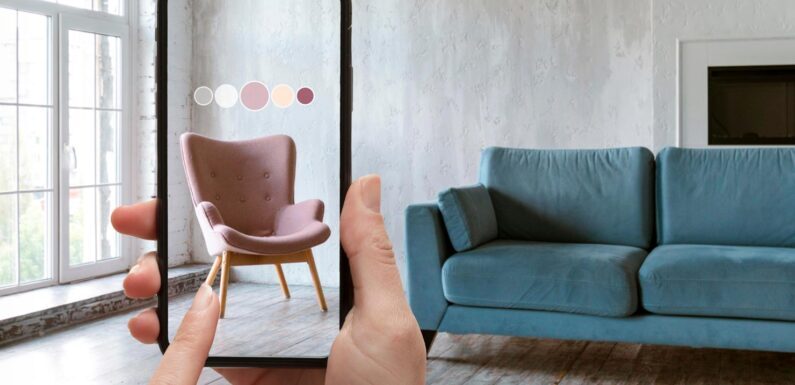
A customer uses the configurator to tweak their product and then clicks a button to view their product in their actual surroundings with their phone’s camera.
Want to see how that blue sofa will look like in your living room? Hold up your phone to the room, and it’s right there in front of you in the room.
Why Brands are investing in AR?
A major reason for product return is that they are not what the customer envisioned in their environment. The only thing AR can do is correct that issue before the purchase.
Today, the use of 3D configurators with AR is being extended to furniture brands, home decor companies, even clothing brands, all with the aim of minimizing returns and building shopper confidence.
3. It’s time for Mobile-First Design.
3D configurators have been pretty successful on desktop for years but have been cumbersome to use on cells. The interface was cumbersome. The rotation of the product was cumbersome. Things just didn’t work smoothly on a small screen.
That’s changing fast.
The Shift to Touch-First Interaction
Most new 3D product configurator tools are focused on the mobile consumer first in 2026. Hand controls are intuitive. Swipe to rotate. Pinch to zoom. Tap to color change!
It makes good sense given that the majority of online sales are now taking place on smartphones. If your configurator is only effective when viewed on a laptop, you’ve just lost a big portion of your audience.
Brands are now first testing their configurators on phones, and then on desktops. It’s a complete turnaround from 3 years ago.
4. AI is guiding shoppers to make better choices.
AI is creeping its way into 3D configurators in a very intriguing manner.
Smart Suggestions and Personalization
Some configurators now leverage artificial intelligence to suggest customizations for the shoppers, rather than letting them make it up themselves. The AI then scans the shoppers’ selections and suggests, for instance, “Try this finish on top of it, or, this color looks good with other shoppers, so you may want to consider this one too.
It’s as if you had a clever salesperson in the tool!
Behavior-Based Recommendations
Some brands even leverage AI to display personalised suggestions in line with a shopper’s previous buying habits. If you have studied up on the latest minimalist furnishings, the configurator may begin you with choices that appear to be minimalist.
This level of intelligent personalisation assists individuals in making decisions quicker and more confident in their choice of purchase.
5. The emergence of visuals based on the photo-realistic approach.
Recently, 3D product images were a little fake, a few years ago. You could tell they weren’t real photos. It was dark. Shadows looked strange. Materials were not quite suited.
By 2026, the disparity between simulations and real photographs is almost closed.
How PBR changed everything.
The modern 3D product configurators are based on a technique called physically based rendering (PBR). This means that the virtual product acts to light in the same manner as a real product would. Metal looks shiny. Fabric looks soft. Wood grain appears authentic.
If the customer is not able to distinguish if it is a render or a real photo, their trust is enhanced. In some sense they know exactly what they are getting.
It is particularly important for premium and luxury brands as the customer is expecting maximum quality in everything that is presented.
6. Headless Commerce Makes Configurators More Flexible.
This will be a bit technical but it’s important.
For Configurators, what does Headless commerce mean?
Headless commerce refers to the separation of the front end (customer-facing part of the site) from the back end (where all the data and logic reside). This allows brands to have a lot more flexibility when it comes to how they set up and showcase their stores.
More ecommerce brands are creating their 3D product configurators in 2026, with headless setups.
More ecommerce brands are creating their 3D product configurators in 2026, with headless setups. This is because the configurator can be integrated at any place, such as on the brand’s website, within a mobile application, in a social posting or even within a digital display in the Pop-up Store.
The configurator is no longer confined in one place. It can reside anywhere the customer decides.
This is a game-changer for brands selling on different channels. The configurator is created one time and deployed everywhere.
7. People are attaching configurators directly to manufacturing.
It’s likely the most interesting trend from a business point of view.
The Design-to-Manufacture Connection
Back then, a customer would use a configurator to create a product configuration, order it and a member of the company would then manually convert the order into a production file. It is a time-consuming and prone-to-mistakes approach.
Smart brands are integrating their 3D product configurators right into their manufacturing in 2026. Once a customer has settled on a design the information goes directly to production.
No manual steps. No translation errors. Less waste.
Who Benefits Most
It’s particularly effective for companies in the furniture, custom apparel, or industrial equipment industries. The configurator evolves from a sales tool into a real sales experience. It becomes a process.It becomes a process in the production process.
8. social sharing features are fueling word of mouth
When people show off things that they made, they love it. Now, brands are capitalizing on that emotion.
How to share inside a Configurator
A “share your design” button will probably be a part of modern 3D product configurators in the year 2026. A customer takes 10 minutes to create their ideal sneaker or personalize their laptop skin, and then they can post it directly to Instagram, TikTok or WhatsApp.
This is a free marketing opportunity for the brand.
The Viral Loop Effect
Their friends see the same design, click on the link and are taken to the product page, where they can create their own version. It is a loop that self constructs.
There are even brands that have campaigns where the designs that are most shared win prizes or are created in limited editions.
9. B2B Companies Are Also Taking Adopt of Configurators
Historically 3D product configurators were primarily regarded as a B2C (business to customer) tool. However, B2B is getting a rush of activity from companies in 2026.
Why B2B Is Catching On
3D configurators are now beginning to be used in the sales process of industrial equipment manufacturers, office furniture suppliers and commercial builders.
B2B buyers can log in a B2B portal, specify their requirements, and receive a live quote.B2B buyers can log in a B2B portal and configure exactly what they require, and receive a real-time quote.
This is a great time saver for both players. The buyer is more in control. It sells faster than it was listed.
B2B 3D configuration is still newer than B2C, but is gaining momentum. Early adopters of the brand will be in a true competitive position.
10. Sustainability is turning into an integral part of the building.
Last but not least, here’s a trend which is tech and values combined.
The use of a real-time GIS application for displaying environmental impact.
Some 3D product configurators now display sustainability information in real-time as the shopper is making choices. Choose a recycled material and the configurator informs you of the number of plastic bottles used. Select a local manufacturing alternative and compare its carbon savings to overseas.
This provides an incentive for shoppers who want to be green to interact with the configurator even more.
This is what it means to build trust with your brand through transparency.
When companies are transparent about sustainability within the buying process they are generally more likely to gain the loyalty of those who are interested in sustainability. This is not only good for the environment but is good for business too!
Final Thoughts
The 3D product configurator space is on the fast track. Two or three years ago, anything that seemed like a luxury became an expectation for many shoppers.
What do brands need to do next?
Brands who embrace fast, mobile-friendly, AI-powered and AR-powered configurators will be the ones that will be remembered in 2026 and beyond.
Fortunately, the technology is getting more readily available. It’s not a requirement that you need to be a big company to integrate a wonderful 3D configurator to your store.
You can configure a solution for your shoe, furniture, jewelry, or industrial parts business, and there’s a solution for any budget.