


Travel portals have slowly emerged as the foundation of the way in which individuals plan and book their travel today. Instead of using several websites, making calls, and making inferences, it can now be done with just a few clicks, flights, hotels, transfers, and so on, all under one roof.
This simplicity is accompanied by an intelligent system that operates 24 hours to provide speed, accuracy, and convenience to travelers and travel businesses.
Travel portals are designed to deal with complex operations that do not make the user aware of how it came to pass, such as real-time search results and instant confirmations. They integrate various services, handle vast volumes of data, and make all bookings operate efficiently from beginning to end.
We are going to discuss how a travel portal functions, the core functions driving it, the APIs that drive it, and the overall booking process that completes it all.
What is a Travel Portal and How Does It Work?
A travel portal refers to an online service that helps companies in the travel industry to search, compare, purchase, and manage travel services, such as flights, hotels, car rentals, and holiday packages.
In the case of B2B users, travel agency owners, tour operators, and OTAs, it is a centralized platform that enables many suppliers to interlink with a number of sellers using a single digital platform.
A travel portal automates the whole process as opposed to manually coordinating with airlines, hotel partners, and consolidators. It assists traveling businesses to work more efficiently, lessen their reliance on manual labor, and optimize their operations.
How a Travel Portal Works
Essentially, a travel portal operates based on linking three fundamental aspects, which include suppliers, technology, and end users. Here’s a simplified breakdown:
- The portal connects with airlines, hotels, GDSs, wholesalers, and other suppliers through APIs to access real-time availability, pricing, and booking rules.
- When a user is searching for a flight or a hotel, the system makes the process of comparing options by price, schedule, and policies easy by retrieving data from multiple suppliers simultaneously.
- Once a choice has been made, the booking is done immediately and the confirmations, booking references, e-ticket, or vouchers are automatic.
- The platform takes various payment options and administers markups, commissions, and agent credit limits, which are vital in facilitating the smooth operations of B2B.
- Admin users are able to manage agents, control pricing, track bookings, generate reports, and cancel or make changes using one back-office dashboard.
Simply put, a travel portal is a technology-driven business model that converts the conventional travel business into a more streamlined, innovative business model – assisting travel companies in remaining competitive in a more digitalized environment.
Types of Travel Portals (B2B, B2C and B2E)
Travel portals are meant to accommodate various business models and customers in the travel industry. They are usually divided into B2B, B2C, and B2E portals depending on the distribution of services and the end users.
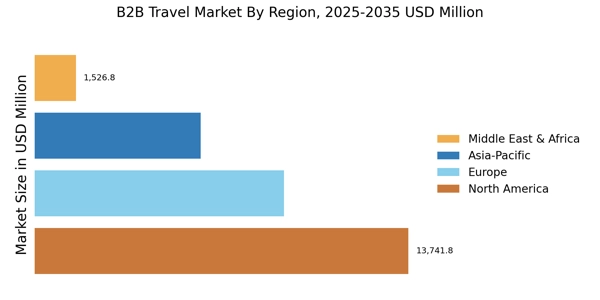
Source: Market Research Future
B2B Travel Portal
A B2B portal is designed to enable agents, sub-agents, and tour operators to book flights, hotels, and other services on behalf of the customers.
They have the benefit of many large agencies working on their own custom platform, which is linked to other systems such as Amadeus or Sabre, where travel portal development can be very effective in handling the access of agents, credit limits, and negotiated pricing.
B2C Travel Portal
B2C travel portals are targeted at end customers who seek to make direct online bookings of travel services. Examples of the popular ones are MakeMyTrip and SkyScanner, where users can search, compare, and book flights or hotels at real-time prices.
B2E Travel Portal
B2E portals are designed to serve corporate travel management and accommodation of employees. SAP Concur is one of the platforms that are frequently used by enterprises to assist employees in booking business travel and adhering to the internal travel policies and approval procedures.
Key Features of a Modern Travel Portal
The current travel portal systems are designed to support large volumes and real-time information and business rules without reducing the speed of operations. In the case of travel businesses, the correct combination of features has a direct effect on efficiency, scalability, and customer satisfaction.
- Live Search and Availability: Customers can have live flight, hotel, and other travel inventory, and they can get their prices right and see the latest offer.
- Multi-Supplier Integration: Links different airlines, hotels, GDSs, and wholesalers on the same platform to have broader inventory coverage.
- Dynamic Pricing/Markup Control: Enables travel companies to establish flexible markups, commissions, and discounts by agents, routes, or types of customers.
- Secure Online Booking Engine: Makes the booking easy with instant bookings, e-ticket and vouchers, and ensures minimal mistakes.
- Various Payments: Accepts cards, wallets, bank transfers, and credit limits to accommodate both B2B and B2C business models.
- Agent and User Management: The option allows creating and managing agent accounts, roles, permissions, and credit limits using a single system.
- Back- Office and Admin Dashboard: This gives one a centralized authority over bookings, cancellations, report and financial information.
- Reporting and Analytics: It creates elaborate sales, booking, and revenue reports to enable effective business decisions.
- Scalable and Customizable Architecture: Architecture that is designed to autonomize with business requirements and suit and change with market demands without significant shocks.
Role of APIs in a Travel Portal Ecosystem
APIs are the pillars of a travel portal ecosystem, which allow various systems to interact with one another without any problems. APIs enable the travel portals to automatically receive and share information in real time as opposed to manually updating this data.
To give an example, in case a travel agency utilizes an airline API, the portal will be able to display real-time flight interactions and fares provided by the airline itself. After a booking has been received, the same API confirms the booking, and it produces the ticket without any human input.
APIs are also important when it comes to bookings. They help with:
- Real-time coordination of inventory and price.
- Dealing with cancellations and amendments.
- Takes and verifies payments and confirmations.
- Distribution of data with accounting, CRM, or reporting software.
In the absence of APIs, a travel portal would have to be manually updated, with disconnected systems, which would be hard to scale up, as well as provide quick and reliable services.
How the Travel Booking Flow Works Step By Step
Bookings made through a travel portal for a B2B agency are easy, accurate, and organized. Here’s how it usually happens:
- The agent will input the travel information like the destination, dates, and the details of the passengers.
- The portal provides the immediate presence of the available options with various suppliers that can be flights, hotels, or holiday packages.
- The agent conducts a review and analysis of schedules, prices, and policies, and picks the most suitable one to offer to the client.
- After choosing the portal will take the booking to the supplier and ensure availability in real time.
- The client is immediately issued with booking confirmations, e-ticket or vouchers.
- The payment is done via the portal, and commissions, markups, or credit limits are made on behalf of the agent.
- After booking, the agent will be in a position to handle cancellations, changes, and create invoices or reports as required.
This flow in stages will provide the agencies with the ability to operate faster in their services, reduce the number of errors, and handle multiple bookings smoothly.
Conclusion
The travel portals have revolutionized the manner in which travel businesses are conducted. Nowadays, it is no longer just a means of simply booking, but a strong ecosystem that integrates suppliers, agents, and customers in harmony. They are no longer just making the booking process easier but are now offering real-time feedback, price flexibility, and automation – transforming complicated functions into scalable workflows.
To B2B travel owners and agencies, adopting these platforms is the only way to remain competitive, reach more, and provide smarter, faster services in a digitalizing travel environment.