


Fintech is now at a crossroads regarding the use of generative AI. By 2026, this technology will no longer be viewed as an exploratory tool or a product development lab. Instead, any fintech development company will embed generative models directly into payment systems, lending platforms, regulatory compliance workflows, and customer-facing products. As a result, the objective of all Fintech operations will be improved reliability and alignment with government regulations while providing measurable business impact.
Presently, banks, digital lenders, and payment providers are using large language models to decrease operational costs, improve decision speed, and increase the complexity of their systems. Generative AI does not eliminate the need for traditional financial infrastructure; rather, it changes the way these organizations internally manage their business processes and adapt to emerging risks and changes in customer, patient, or client expectations.
In 2026, generative AI will be the primary driver of change in the product and operational workflow of the financial technology (FinTech) sector based on actual use patterns seen throughout the industry. Below are five key areas where generative AI will create substantial changes to FinTech product and operational workflow in 2026.
1. How does generative AI improve fraud detection and financial risk analysis?
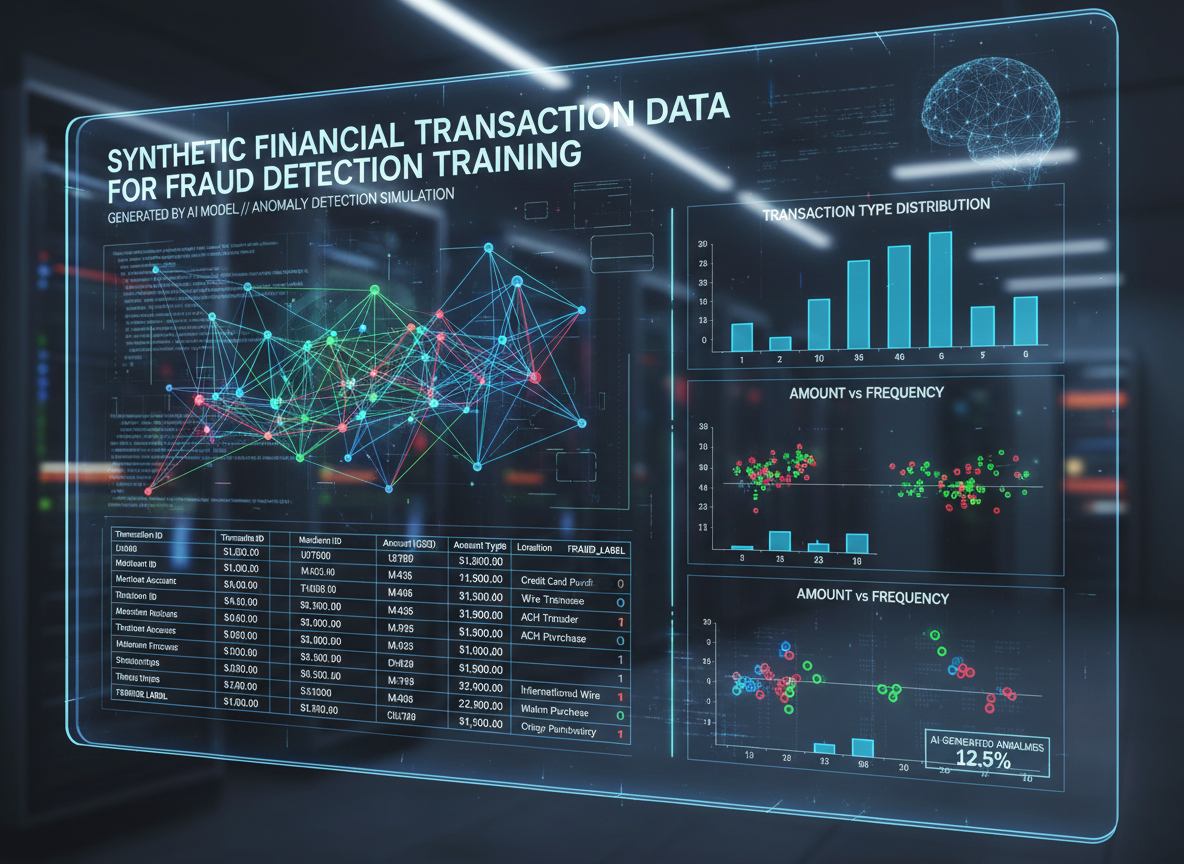
Fraud prevention is one of the most potent issues within FinTech organizations after establishing a large user base. Using generative AI allows financial institutions to improve fraud detection by utilizing transaction activity patterns for adaptive risk model creation in real-time.
Current rule-based systems work based on predefined thresholds and historical fraud case files. The Generative AI model will examine the transaction sequences, the merchants’ behaviours, the signal from the devices, and the user’s history as they are all seen together within one context.
With this approach, it allows for the identification of a much larger number of previously unseen fraud cases and it reduces the number of false positive fraud alerts that intervene with legitimate transactions.
In real-world payment systems, fraud detection engines powered by Artificial Intelligence now allow organizations to reduce the volume of Fraud reviews and improve detection accuracy more quickly. The Fraud models are better able to adapt to new forms of fraud quicker than a static rule set would be able to adapt; this is particularly important to Global payment organisations that average millions of transactions per day.
2. How does generative AI automate compliance and regulatory reporting?
FinTechs have to comply with many different laws, making regulatory compliance very difficult. Generative AI enables compliance workflows to be automated almost entirely through the ability to process a large number of documents, transaction logs, and policy updates at once.
By using Large Language Models, Regulatory text and Internal Data can be analysed in order for the Generative AI to create Audit Ready Reports that comply with AML, KYC, GDPR, and PSD2. AI-enabled compliance assistants allow Compliance Teams to prepare more documentation quicker and answer Regulator Questions while producing fewer manual errors.
According to McKinsey, the use of AI adds a significant amount of efficiency when it comes to the automation of compliance, allowing up to 40% reduction in costs associated with Reporting and Preparing for an Audit for regulated Financial Institutions (McKinsey). This efficiency of AI will be beneficial for Digital Banks and Cross Border Payment Platforms.
In order to create an AI-enabled Compliance System, it is imperative to work with an Experienced fintech development to incorporate regulatory requirements into the System Architecture from the very beginning rather than have to incur the costs associated with fixing errors after the System has already been launched.
Image Suggestion: AI-powered Compliance and Regulatory Reporting Dashboard
Alt Text: Fintech compliance automation through Generative AI
3. How does generative AI personalize digital banking experiences?
Customer experience is one of the primary driving forces to differentiate a FinTech company. Generative AI will allow for greater personalized financial interactions than a standard personalisation engine could provide.
By 2026, all digital banking applications will integrate generative AI to create customised financial insights based on a customer’s spending habits, income patterns, lifestyle, and financial aspirations, making the tone and recommendations change to suit the customer’s environment. One customer will receive advice on how to budget, while another may see credit optimization suggestions or recommendations for investing.
Generative AI also allows a customer to understand financial decisions clearly. Therefore, by giving customers more insight, they will build more trust and make clearer connections to the value of products and services offered by the neobanking and wealth management industries.
Companies that provide AI-based personalisation features usually experience higher usage rates for those features, as well as fewer interactions with their customer support teams, due to the transparency associated with the technologies involved in the process.
4. How does generative AI transform credit scoring and lending decisions?
The growing volatility of markets and increasing demand for financial inclusion place continued pressure on credit assessment systems. The integration of Generative AI with traditional credit metrics will allow improved lending decision-making based upon alternative forms of data beyond the historical credit scores.
Through the use of Generative AI, the assessment of prospective borrowers will be based upon an accurate analysis of cash flow transactions/velocity and borrower behaviour as opposed to simply relying upon traditional credit metrics (i.e., previous credit scores).
Additionally, through the use of simulation techniques within AI models, lenders have access to insight into a portfolio’s potential performance under different economic scenarios or stress conditions. This enables lenders to adjust interest rates and maximum credit limits to establish lending opportunities for borrowers dynamically, rather than simply relying upon historical data and traditional credit risk assessment standards.
As highlighted by the World Economic Forum, AI-powered credit assessment solutions will provide lenders with the ability to expand service offerings to meet the needs of underbanked consumers (World Economic Forum).
From an engineering standpoint, they must have multiple layers of governance and the ability to explain how a model makes decisions when assessing creditworthiness, to withstand scrutiny from the regulator. Without transparency into how Generative AI credit scoring systems operate, even if they are accurate, they will still be rejected by regulators.

5. How does generative AI accelerate FinTech product development and operations?
Through all stages of a company’s business operations, generative AI will have impact on FinTech (Financial Technology) operations. Engineering Departments are able to leverage AI-assisted code generation (co-pilots) to create code professionals, technical documentation and automate testing through AI. Product Teams can evaluate large quantities of Customer Feedback at once, and create prototypes to simulate Customer Adoption of Features.
In environments with heavy technology infrastructure, such as cloud computing, AI can help Teams monitor Systems, resolve Incidents, and conduct Predictive Maintenance.
In all situations, AI allows Operations to respond to problems much quicker than previously possible, and Operations can reduce downtime while maintaining a maximum number of Technical Support Personnel by utilizing AI to resolve issues.
Therefore, companies with embedded AI into Development and Operational Tracking Systems will not only deliver Features quicker than companies without AI but will also deliver a more stable Product, thereby strengthening their Competitive Advantage over the long term.
Why generative AI in FinTech requires a structured engineering approach
Generative AI’s full potential will not be realized until integrated into secure, scalable, and compliant environments. Financial systems require explainability of Models, management of Data Pipelines and robust governance.
When firms use GenAI as a “one-off” experiment, they often expose themselves to compliance risk and require a re-architecture of the applied Infrastructure. Firms innovating now by embedding GenAI into core workflow processes will achieve improved efficiencies and will have much greater flexibility and adaptability to change on an ongoing basis.
By the end of 2026, successful FinTech platforms will consider Generative AI to be an integral part of their Financial Infrastructure, as opposed to just a temporary innovation initiative.
